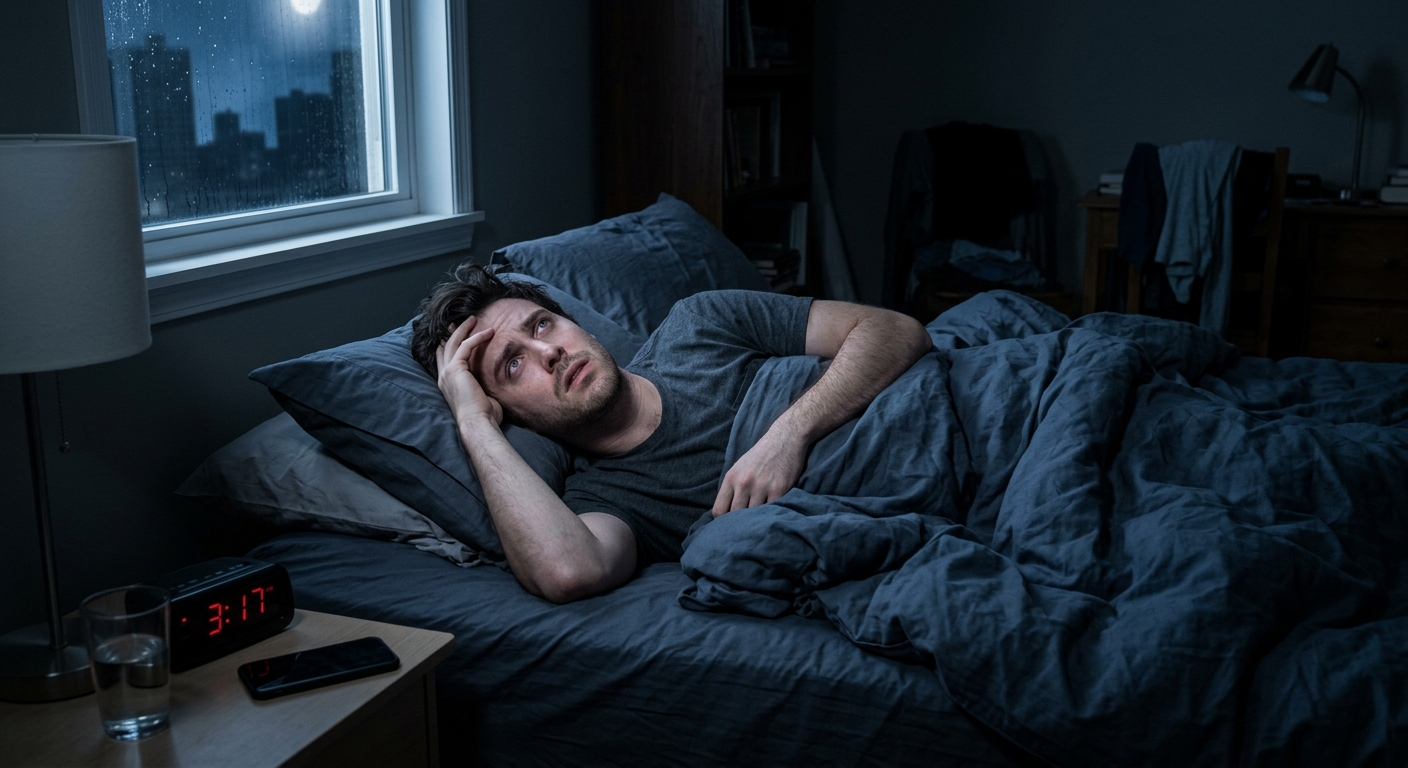
This not a how-to post, as I’m not fully successful right now in fixing my sleep, but I’m at a place where I can somewhat consistently get a good night’s sleep if I follow my nightly pre-sleep routine. What I did and what works for me might not work for you, but it is still a really good primer to generally get a better quality of sleep no matter what stage of sleep dysfunction you are on. This might take on a general rambling form because I’m mostly trying to chronicle what I did and what worked, but I will try to keep it systematic nonetheless.
I honestly had the best sleep quality ever just a few years ago. People used to gripe about how badly they were sleeping, and how they needed to do certain things certain way, and not matter what they don’t get a good night’s sleep, and I used to scoff internally at them. I slept good no matter what – no matter what I ate, when I ate it, after a few days of fasting, after strenuous exercise or no exercise at all. And now I’m reduced to a crying, bumbling mess – ready to do anything or spend however much money to even get a minute improvement in my sleep quality. This is one of life’s great lessons – to not take anything for granted. You might be running today, but you can be reduced to an Apahij (a disabled person) tomorrow, happy about moving your limb even a little bit and yearning for the days when walking was effortless.
Anyway, I moved into this new apartment in the middle of 2023, and I found a stark difference in my sleep quality almost immediately. I started waking up somewhat tired, and found that I was greying much more rapidly. I went from grey hairs in the single digits to tens, almost in the course of a month. At that point, I wasn’t taking it seriously – I was going to sleep at 1 in the morning, eating not very healthily, and generally living the life of a young, careless person. I was still eating better than most people, mind you. I had been on a low-carb diet since 2012, and my diet mainly consisted of vegetables, healthy fats and meat; but I was also cheating on my diet a lot. Sometimes there were more exceptions than the rule, but I generally did eat well.
However, a big jolt came when I tried to work out. I have a modest upper-body workout regimen consisting mostly of L-sits, calisthenics on the rings, pull-ups and dips. And when I tried doing that, I would not be able to sleep at night. I would get at most 4-5 hours of sleep, and then I would be up and alert and not be able to fall back asleep. At that time, I attributed it to stress, and started eating healthily, but little did I know that I would not be able to work out, ever again. Stopping to work out did allow me to get a decent sleep every night, for now.
After half a year, I went through a break up, and naturally, I wasn’t able to sleep properly again. This time, in order to manage my stress, I started going for long walks. I noticed that I used to be able to sleep further than 5 hours if I walked during the day. Running, and strength training (including callisthenics) still disrupted by sleep, but walking didn’t.
After 6 months of walking, and still somewhat decent quality of sleep, but not as good as before, it all took a nosedive. I was sleeping badly again, and nothing in my life or my lifestyle had changed. It was as if suddenly my body decided it’s not going to sleep well. It was at this point I realised something is horribly wrong, and I started going to sleep YouTube, and went down that rabbit hole. I got really careful about plastic use in my life, discarded my non-stick, teflon pans, bought a water-filter that filters out PFAS, and was really careful about things. There was some improvement in my quality of sleep, and there was some correlation, but no clear link for causation.
I used to sleep on the floor on top of a sleeping bag, wrapped by bedsheets. I really need a hard surface to sleep on. Mattresses bother me, especially if it’s an especially soft one that I sink into. Sleeping on the floor was good – and it was a choice, I wasn’t living the bachelor life – but what bothered me was that the carpet on the floor was made of plastic, and I was probably inhaling plastic particulates and carcinogenic fire-retardants all night. Hence I bought a tulip poplar-wood bedframe from KD Frames, which had no finishing/completely chemical free. And an authentic Japanese shikibuton from Futon Beds From Japan, which are hypoallergenic and easy to clean/disinfect. As well as a wool-filled pillow with a cotton cover from Cuddle Ewe. These were really expensive, but at that point, I would spend whatever to fix my sleep.
And I did sleep well for a few months, before I started waking up after 5 hours again. And this time, my sleep disruption came with additional physical manisfestations than just greying (which I was getting double-time – yaay!). For the first time in my life, I started breathing through my mouth while sleeping, and I used to wake up with a dry mouth, and a really horrible taste. I also started getting eczema on my scalp, and developed a mild sleep apnea, and it was all around a horrible time. I would often wake up in the middle of the night with a start, after I had stopped breathing, with my heart beating fast, and feeling very warm. After months of trying to handle the symptoms and sleeping horribly, I discovered an important information. You need to air out the shikibuton and put it out on the balcony in the sun for several hours each side, so that the UV radiation and the heat kills the dust mites. Also, I used to sleep at a spot where the air from the AC vent would directly hit my face. I also discovered mold in the apartment. Fixing these three things let to a dramatic improvement in my sleep.
I moved to a new house shortly thereafter, and I was also going through a stressful transition in my life. My sleep quality took a hit again, despite implementing everything I had learned before, and supplementing with gelatin, magnesium and a low-dose lithium orotate before bed. Lithium orotate has other neuro-protective properties than just giving you good sleep, and everyone should consume it, especially ones who have a family history of Alzheimer’s/dementia. Anyway, what helped this time was high-dose Vitamin D. I tested my Vitamin D levels and my 25-OH-D3 level was abysmally low at 27 ng/mL. Dr. Gominak has a specific RightSleep protocol where you take high-dose Vit D, along with a B-50 complex and additional B12 vitamins. The idea being that the D3 will start to fix the sleep issues and get your brain into the habit of getting into deep sleep. But this also uses up a lot of B-vitamins in the process and makes you deficient. You need to supply additional B-vitamins so that the intestinal flora gets the right conditions to start creating the B-vitamins again. Unfortunately, the B-50 complex gave me really bad gas – I was a veritable loudspeaker playing a complex array of fart noises on the days I took the B-50. But the B12 was fine, and I got myself an additive-free liquid D3 drops in MCT oil. It is always better to get a a liquid D3 supplement, as tablets and capsules have additives and fillers.
My sleep quality drastically improved and I was sleeping well with the Vitamin D supplementation, but there was one more improvement to be made. I still woke up in the middle of the night one day out of seven, and I needed to start getting consistent sleep. One day, while I was sitting on the bed, I noticed that one of my legs was going numb and I was feeling pins and needles on my butt, and legs. The edge of the slat from the bed frame was digging into the skin of my butt and cutting off blood circulation. An idea popped in my head that, maybe this is what I was happening to me in the middle of my sleep. Blood circulation was getting cut off to areas, and my brain was sending a jolt of cortisol to wake me up just slightly, so that I could shift positions and restore blood flow. Maybe this was the cause of my sleep apnea, and my inability to fall into the deep, restorative sleep. I started sleeping on the shikibuton on the floor. It is designed to be used on the floor, I had bought a bed frame to get myself away from huffing plastic dust all night. Fortunately, this new house I had moved into had wooden floors, and getting them clean took just one session of vacuuming.
I’m at this point right now. My sleep is mostly okay, unless I break a cardinal rule, like eating in the evening, or lifting heavy boxes or strength training. I drink gelatin with a tiny bit of L-Theanine before going to bed, along with lithium orotate and Magnesium. I still mouth-breathe every night, and sometimes snore, but I do not wake up in the middle of the night. I’m trying out myofunctional therapy to retrain my airway to use the nose and not default to the mouth as soon as I lose motor control.
I will try to now list the actionable items from this long wall of text.
1. Get to bed early and consistently
Getting to sleep early is probably one of the most important predictors of sleep quality. If I go to sleep by ten, I will sleep well, otherwise I won’t, and will probably snore and have apnea episodes. It is also important to go to bed at the same time every day so that the circadian rhythm can fall into place and your body won’t have to keep guessing.
2. Be mindful of ACs
Make sure that the AC isn’t directly blowing its dry wind into your face. This dries out your mucus membranes and nasal pathways and directly leads to snoring/disrupted sleep.
3. Cool and dark bedroom
I sleep the best at 68F with two bedsheets, one covering my whole body and one just my feet. Your body needs to cool off to fall asleep and even slightly warmer temperatures have prevented me from falling asleep or staying asleep.
It is also important to have a bedroom as dark as possible. It was been scientifically proven that this leads to better sleep. It is not always possible to achieve a completely dark bedroom, so a sleep mask can come in handy in these situations.
3. Clean and/or irradiated bedding and allergies
I developed a dust mite allergy, eczema, and mouth breathing due to my bedding accruing dust mites and dust mite poops. I used to clean out and vacuum my bedding and even aired it in the apartment, but I needed to sun it. This clogged up my nose and inflamed my airways and made me mouth breathe.
Clean your bedding religiously!
4. Eradicate physical disruptions
The edges of the slats in my bed frames used to dig into my skin and cut off blood flow, as my shikibuton wasn’t thick enough to provide enough cushion. My assumption was that my brain tried to make me shift my position by spiking my cortisol and this never let me get into deep sleep, and woke me up because my sleep was horrible enough, as is. Probably also the reason why I developed a mild sleep apnea.
5. Hot shower before bed
I have mixed feelings about this. A really hot shower helps to sleep better – as the body cools down after the hot shower and that induces sleep. However, I have often found that my body doesn’t adequately cool down, and even if I fall asleep quickly, I will wake up after 5 hours feeling very warm.
6. Exercise
Exercise is supposed to help you sleep. A tired body will fall asleep faster and a worked-out body needs sleep to repair the damage and get stronger. Unfortunately, if I work out even a little bit, my cortisol gets elevated enough that I do not sleep beyond 5 hours. Your mileage may vary, obviously, but I do not sleep if I work out. Walking works fantastically, though.
7. Fasting
Fasting is a surefire way to get less sleep, at least for me. The elevated cortisol, again, won’t let me go beyond 5 hours.
8. Eating heavy close to bedtime
My sleep will get disrupted if I eat a heavy meal near bedtime. I try to eat at least 4 hours before I sleep, and even a little bit of food seems to disrupt my sleep.
9. Vitamin D
Vitamin D directly responsible for producing and regulating the hormones and brain chemicals that govern the sleep-wake cycle. Without adequate Vitamin D, you will have poor sleep. Get your levels tested, and supplement – hopefully under a doctor’s supervision. Sunlight exposure is always a better way to increase your levels than supplementation – that pathway is better regulated.
10. Supplements which work
- Magnesium calms you down and lets you fall asleep quicker. However if your sleep quality is bad enough, Magnesium might make you wake up in the night since it causes intestinal water re-absorption and retention.
- L-Theanine boosts alpha-brain waves and helps increase calming neurotransmitters.
- Low-dose lithium orotate calms the nervous system, supports relaxation, and encourages a natural sleep-wake rhythm. (Read more)
- Melatonin supplementation may work in the short term, but your body gets used to it pretty quickly, and you have to supplement more and more to get the same effect. Moreover, dietary melatonin is poorly absorbed, and liposomal melatonin is supposed to better. In any case, the goal should be to try to regulate the body enough for it to produce its own melatonin, and not supplement.
Discover more from Three in the Forest
Subscribe to get the latest posts sent to your email.